

Frequently purchased together
-
Dutch Nutrient Bloom Stacker - 1 Litre
Regular price $28.95Regular price -
Dutch Nutrient Bloom Fortifier - 500 Grams
Regular price $40.99Regular price -
Dutch Nutrient CalMend - 1 Litre
Regular price $15.95Regular price -
Dutch Nutrient Diamond - 1 Litre
Regular price $16.00Regular price


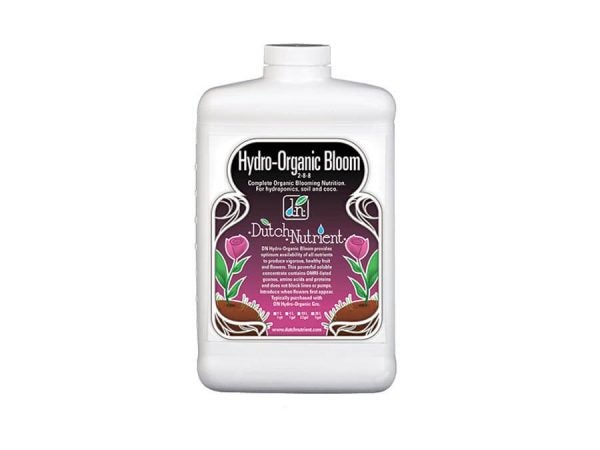
Dutch Nutrient Hydro-Organic Bloom - 1 Litre
Newmarket, Ontario (Head Office)
1175 Stellar Drive, Unit #5
Newmarket, ON L3Y 7B8
- Mon10:00am–6:00pm
- Tue10:00am–6:00pm
- Wed10:00am–6:00pm
- Thu10:00am–6:00pm
- Fri10:00am–6:00pm
- Sat10:00am–4:00pm
- SunClosed


Barrie, Ontario
106 Saunders Road, Unit #2A
Barrie, ON L4N 9A8
- Mon10:00am–5:00pm
- Tue10:00am–5:00pm
- Wed10:00am–5:00pm
- Thu10:00am–5:00pm
- Fri10:00am–5:00pm
- Sat10:00am–3:00pm
- SunClosed
Winnipeg, Manitoba
915 McLeod Avenue, Unit #4
Winnipeg, MB R2G 0Y4
- Mon10:00am–6:00pm
- Tue10:00am–6:00pm
- Wed10:00am–6:00pm
- Thu10:00am–6:00pm
- Fri10:00am–6:00pm
- Sat11:00am–3:00pm
- SunClosed
Sign in required
Back-in-stock notification
Select the store locations where you’d like to pick up this item, or choose Shipping to have it delivered.
Special order request
Select the store where you’d prefer to pick up your special order. To choose a different store, unselect your current choice first.
Description
Description
Description
Built as a one-part hydro-organic nutrient, Hydro-Organic Bloom is formulated to meet the nutritional requirements of blooming plants in soil-less or soil media. The formula is enriched with OMRI certified organics and is positioned as a non-burning recipe, which makes it a practical fit for growers who want bloom support that stays gentle while development keeps moving forward. Because it’s designed as a stand-alone nutrient, it’s well suited to setups that prefer a simpler bloom foundation without juggling multiple bottles.
Hydro-Organic Bloom is made with a concentrated formula of amino acids and vitamins, supported by humates and electrolytes, plus major-minor-micro minerals. Those inputs are included to support the fertility your soil-less medium needs during bloom, helping keep flowering performance steady from early bloom through the finishing stretch. Alongside core bloom-stage nutrition, it’s designed to support nutrient uptake, helping plants make better use of what’s available in the root zone as bloom demand rises.
Finish quality is part of the focus, too. Organic components in Hydro-Organic Bloom are described as supporting a noticeable increase of essential oils and aromas, which helps bring a more complete, more aromatic finish to fruiting and flowering plants. The formula is also described as helping increase beneficial bacteria in the growing medium, supporting a healthier, more active root-zone environment through the bloom cycle.
The facts layer is simple: Dutch Nutrient Hydro-Organic Bloom carries a 2-8-8 nutrient analysis and is presented as complete organic blooming nutrition for hydroponics, soil, and coco. This is a good fit for growers who want a completely soluble base nutrient with bloom-stage nutrition, stand-alone nutrient simplicity, and finish-focused support for essential oils and aromas in soil-less or soil media.
How to use
- Week 1: do not use this product during this week of vegetative growth.
- Week 2: do not use this product during this week of vegetative growth.
- Week 3: do not use this product during this week of vegetative growth.
- Week 4: do not use this product during this week of vegetative growth.
Flowering stage - Hydro-Organic Bloom:
- Week 1: do not use this product during this week of flowering.
- Week 2: do not use this product during this week of flowering.
- Week 3: mix 1.25 ml per litre of water or nutrient solution.
- Week 4: mix 2.5 ml per litre of water or nutrient solution.
- Week 5: mix 5.0 ml per litre of water or nutrient solution.
- Week 6: mix 5.0 ml per litre of water or nutrient solution.
- Week 7: do not use this product during this week of flowering.
- Week 8: do not use this product during this week of flowering.
Product benefits
Guaranteed analysis
Derived from
How To Use
How To Use
How to Use Dutch Nutrient Hydro-Organic Bloom - 1 Litre
Step-by-step mixing and feeding instructions for Dutch Nutrient Hydro-Organic Bloom - 1 Litre.
Mixing & preparation
Fill your reservoir or watering container with clean, room-temperature water first. Shake the bottle of Dutch Nutrient Hydro-Organic Bloom - 1 Litre well before every use. Using the feeding schedule below, measure the recommended dose and add it directly to the water while stirring. Allow the solution to mix fully before adding any other fertilizers, additives, or supplements.
Always add nutrients to water — not the other way around. Mix thoroughly between products to ensure an even, stable nutrient solution.
Week-by-week feeding schedule
Vegetative stage — Hydro-Organic Bloom
- Week 1: do not use this product during this week of vegetative growth.
- Week 2: do not use this product during this week of vegetative growth.
- Week 3: do not use this product during this week of vegetative growth.
- Week 4: do not use this product during this week of vegetative growth.
Flowering stage — Hydro-Organic Bloom
- Week 1: do not use this product during this week of flowering.
- Week 2: do not use this product during this week of flowering.
- Week 3: mix 1.25 ml per litre of water or nutrient solution.
- Week 4: mix 2.5 ml per litre of water or nutrient solution.
- Week 5: mix 5.0 ml per litre of water or nutrient solution.
- Week 6: mix 5.0 ml per litre of water or nutrient solution.
- Week 7: do not use this product during this week of flowering.
- Week 8: do not use this product during this week of flowering.
Tips for best results
- Maintain pH and EC/ppm within the range recommended for your growing medium and crop.
- Use fresh nutrient solution whenever possible and avoid leaving mixed solution stagnant for long periods.
- Store nutrients in a cool, dark place away from direct sunlight and extreme temperatures.
- Keep bottles tightly sealed when not in use to reduce air exposure and preserve product quality.
- Use clean measuring tools and regularly rinse or clean your reservoir, lines, and irrigation equipment.
Common mistakes to avoid
- Do not mix different nutrients or additives together in concentrated form before adding them to water.
- Do not exceed the recommended dosage unless you are following a tested, crop-specific feeding plan.
- Do not skip pH or EC/ppm checks when growing in hydroponic or soilless systems.
- Do not allow the nutrient solution to freeze or overheat, as this can damage the formulation.
- Do not ignore the directions on the product label for your specific crop, growth stage, and system type.
Warnings & Safety
Warnings & Safety
Important – Safety Information
General Safety Precautions
First Aid – Skin Contact
First Aid – Eye Contact
First Aid – Ingestion
First aid – Inhalation
Storage And Handling
Important – Medical
Guaranteed Minimum Analysis
Guaranteed Minimum Analysis
| Total Nitrogen (N) | 2.0% |
|---|---|
| Ammoniacal Nitrogen (N) | 0.9% |
| Nitrate Nitrogen (N) | 0.9% |
| Water Soluble Nitrogen (N) | 0.2% |
| Available Phosphate (P2O5) | 8.0% |
| Available Potash (K2O) | 8.0% |
Frequently Asked Questions
Frequently Asked Questions
Why is total nitrogen (N) important for plant growth, and what makes it different from other nutrients?
What Is ammoniacal nitrogen (N) and why do plants need It?
What does nitrate nitrogen (N) do for plants?
Why is water-soluble nitrogen important for plant growth, and what makes it unique compared to other nitrogen sources?
What does available phosphate (P₂O₅) do for plant growth?
What does available potash (K₂O) do for plants?
What makes bat guano different from other organic fertilizers for plants?
What makes ammonium nitrate different from other nitrogen ingredients for plant growth?
Is potassium nitrate better for quick deficiency correction than other potassium sources?
Can phosphoric acid cause nutrient lockout?
Is potassium hydroxide just a potassium fertilizer?
What does kelp extract actually do for plant growth?
Is sea bird guano better than other organic nutrients for fast growth?
What does monoammonium phosphate actually do for plant roots?
Frequently purchased together
-
Dutch Nutrient Bloom Stacker - 1 Litre
Regular price $28.95Regular price -
Dutch Nutrient Bloom Fortifier - 500 Grams
Regular price $40.99Regular price -
Dutch Nutrient CalMend - 1 Litre
Regular price $15.95Regular price -
Dutch Nutrient Diamond - 1 Litre
Regular price $16.00Regular price

Vegetative — Week 1
-
Hydro-Organic Gro—
-
Hydro-Organic Bloom—
-
Growth Burst—
-
Diamond—
-
Bloom Stacker—
-
Enhance Foliar Spray—
-
Clear—
Flowering — Week 1
-
Hydro-Organic Gro—
-
Hydro-Organic Bloom—
-
Growth Burst—
-
Diamond—
-
Bloom Stacker—
-
Enhance Foliar Spray—
-
Clear—