Frequently purchased together
-
Dark Earth Soil Thrive Nutrient Blend - 5.18 Lb
Regular price $24.94Regular price


Reviews are submitted by verified customers after purchase. This section shows a summary of product feedback rather than the full individual review list.

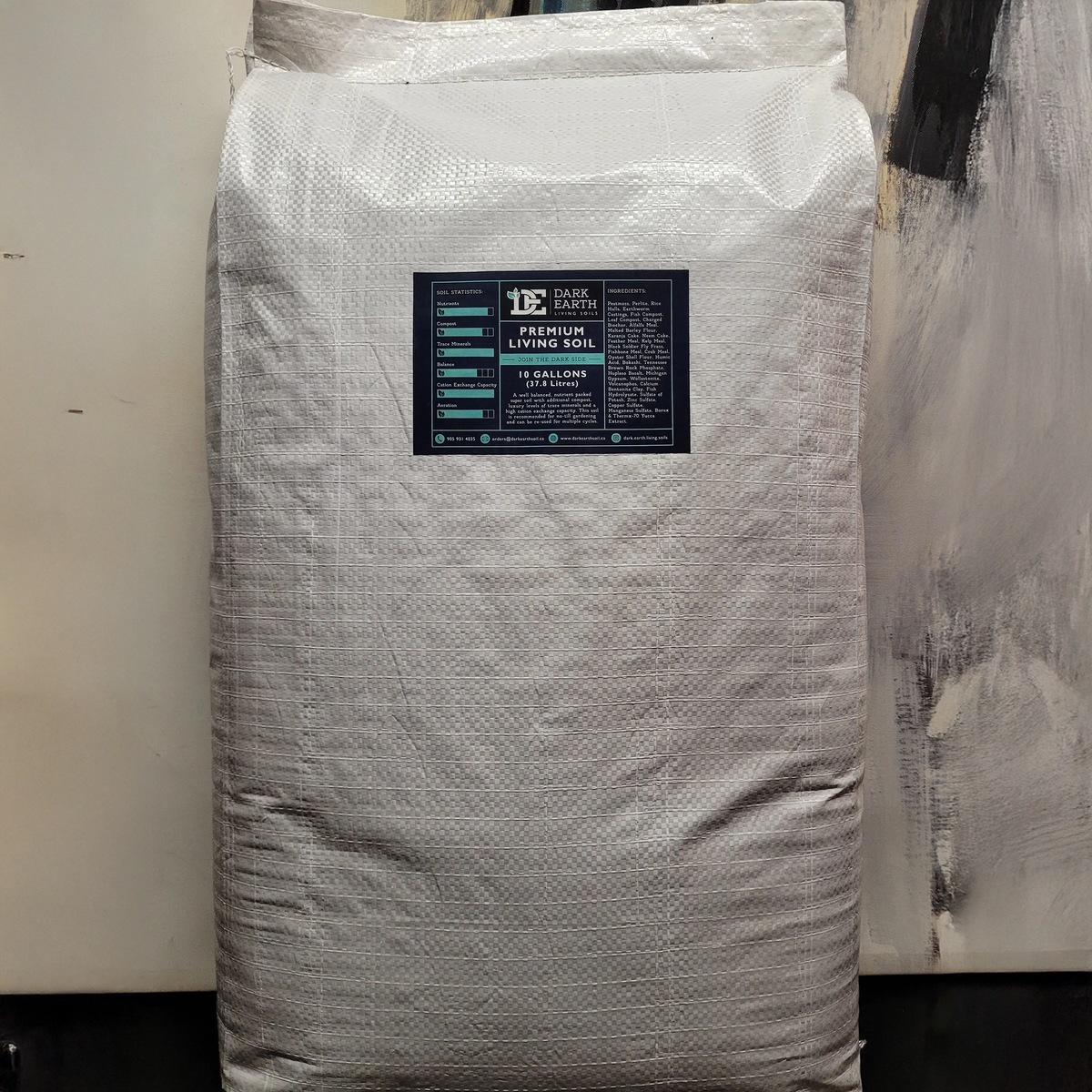
Dark Earth Black Magic Super Soil (Premium Living Soil) - 37.85 Litre
Regular price
$39.99
Regular price
Sale price
$39.99
Shipping calculated at checkout.
Store Availability
Newmarket, Ontario (Head Office)
1175 Stellar Drive, Unit #5
Newmarket, ON L3Y 7B8
- Mon10:00am–6:00pm
- Tue10:00am–6:00pm
- Wed10:00am–6:00pm
- Thu10:00am–6:00pm
- Fri10:00am–6:00pm
- Sat10:00am–4:00pm
- SunClosed


Barrie, Ontario
106 Saunders Road, Unit #2A
Barrie, ON L4N 9A8
- Mon10:00am–6:00pm
- Tue10:00am–6:00pm
- Wed10:00am–6:00pm
- Thu10:00am–6:00pm
- Fri10:00am–6:00pm
- Sat10:00am–4:00pm
- SunClosed
Winnipeg, Manitoba
915 McLeod Avenue, Unit #4
Winnipeg, MB R2G 0Y4
- Mon10:00am–6:00pm
- Tue10:00am–6:00pm
- Wed10:00am–6:00pm
- Thu10:00am–6:00pm
- Fri10:00am–6:00pm
- Sat11:00am–3:00pm
- SunClosed
Quantity
Not Eligible for Free Shipping
Description
Description
Dark Earth Black Magic Super Soil (Premium Living Soil) is a living soil and nutrient-dense super soil built for long term fertility, strong nutrient retention, and active nutrient cycling in soil-based gardens.
This premium living soil is made with 30% compost by weight and is designed around a high cation exchange capacity for superior nutrient retention, helping nutrients stay available in the root zone instead of washing out quickly. It’s optimized for heavy feeding plants with a balanced NPK profile, so it functions as a complete, fertility-forward soil medium rather than a plain potting mix.
A key differentiator in Dark Earth Black Magic Super Soil (Premium Living Soil) is its diverse microbial ecosystem that drives nutrient cycling. That biological activity supports a more dynamic root-zone environment, helping organic inputs break down and become available over time. As the soil develops, it’s also described to continuously improve in structure and microbial diversity, which supports consistent performance from cycle to cycle.
The ingredient base blends classic soil-building components for structure and aeration, including peatmoss, perlite, and rice hulls, alongside rich organic matter such as earthworm castings, fish compost, and leaf compost. The blend also includes charged biochar, bokashi, humic acid, fish hydrolysate, and activated beneficial microbes to support a biologically active soil profile.
For broad-spectrum fertility, this nutrient-dense super soil includes a wide range of organic meals and mineral inputs. Plant- and marine-derived ingredients include alfalfa meal, kelp meal, feather meal, fishbone meal, insect frass, crab meal, and oyster shell flour. Mineral amendments and trace-mineral sources include soft rock phosphate, volcanic basalt rock dust, gypsum, wollastonite, volcanophos, calcium bentonite clay, and targeted sulfates for micronutrient support, including zinc, copper, manganese, iron, and boron, plus yucca extract.
Dark Earth Black Magic Super Soil (Premium Living Soil) is a good fit for growers who want a premium living soil with 30% compost by weight, high cation exchange capacity, superior nutrient retention, and a diverse microbial ecosystem that drives nutrient cycling for long term fertility in soil-based growing.
Product benefits: Complete Super Soil; Nutrient Retention; Soil Biology Support; Root Zone Biology; Consistent Performance; Indoor; Outdoor; Flowering Stage; Vegetative Stage; Soilless; Organic.
Derived from: Peat Moss; Perlite; Rice Hulls; Earthworm Castings; Fish Compost; Mushroom Compost; Biochar; Alfalfa Meal; Malted Barley Flour; Feather Meal; Kelp Meal; Insect Frass; Fishbone Meal; Crustacean Meal; Oyster Shell Flour; Humic Acid; Bokashi; Soft Rock Phosphate; Basalt Rock Dust; Gypsum; Wollastonite; Volcanophos; Calcium Bentonite Clay; Fish Protein Hydrolysate; Fish Hydrolysate; Activated Beneficial Microbes; Sulfate of Potash; Zinc Sulfate; Copper Sulfate; Manganese Sulfate; Iron Sulfate; Etibor-48 Boron; Yucca Extract.
This premium living soil is made with 30% compost by weight and is designed around a high cation exchange capacity for superior nutrient retention, helping nutrients stay available in the root zone instead of washing out quickly. It’s optimized for heavy feeding plants with a balanced NPK profile, so it functions as a complete, fertility-forward soil medium rather than a plain potting mix.
A key differentiator in Dark Earth Black Magic Super Soil (Premium Living Soil) is its diverse microbial ecosystem that drives nutrient cycling. That biological activity supports a more dynamic root-zone environment, helping organic inputs break down and become available over time. As the soil develops, it’s also described to continuously improve in structure and microbial diversity, which supports consistent performance from cycle to cycle.
The ingredient base blends classic soil-building components for structure and aeration, including peatmoss, perlite, and rice hulls, alongside rich organic matter such as earthworm castings, fish compost, and leaf compost. The blend also includes charged biochar, bokashi, humic acid, fish hydrolysate, and activated beneficial microbes to support a biologically active soil profile.
For broad-spectrum fertility, this nutrient-dense super soil includes a wide range of organic meals and mineral inputs. Plant- and marine-derived ingredients include alfalfa meal, kelp meal, feather meal, fishbone meal, insect frass, crab meal, and oyster shell flour. Mineral amendments and trace-mineral sources include soft rock phosphate, volcanic basalt rock dust, gypsum, wollastonite, volcanophos, calcium bentonite clay, and targeted sulfates for micronutrient support, including zinc, copper, manganese, iron, and boron, plus yucca extract.
Dark Earth Black Magic Super Soil (Premium Living Soil) is a good fit for growers who want a premium living soil with 30% compost by weight, high cation exchange capacity, superior nutrient retention, and a diverse microbial ecosystem that drives nutrient cycling for long term fertility in soil-based growing.
Product benefits: Complete Super Soil; Nutrient Retention; Soil Biology Support; Root Zone Biology; Consistent Performance; Indoor; Outdoor; Flowering Stage; Vegetative Stage; Soilless; Organic.
Derived from: Peat Moss; Perlite; Rice Hulls; Earthworm Castings; Fish Compost; Mushroom Compost; Biochar; Alfalfa Meal; Malted Barley Flour; Feather Meal; Kelp Meal; Insect Frass; Fishbone Meal; Crustacean Meal; Oyster Shell Flour; Humic Acid; Bokashi; Soft Rock Phosphate; Basalt Rock Dust; Gypsum; Wollastonite; Volcanophos; Calcium Bentonite Clay; Fish Protein Hydrolysate; Fish Hydrolysate; Activated Beneficial Microbes; Sulfate of Potash; Zinc Sulfate; Copper Sulfate; Manganese Sulfate; Iron Sulfate; Etibor-48 Boron; Yucca Extract.
Derived From
Derived From
| Peat Moss |
| Perlite |
| Rice Hulls |
| Earthworm Castings |
| Fish Compost |
| Mushroom Compost |
| Biochar |
| Alfalfa Meal |
| Malted Barley Flour |
| Feather Meal |
| Kelp Meal |
| Insect Frass |
| Fishbone Meal |
| Crustacean Meal |
| Oyster Shell Flour |
| Humic Acid |
| Bokashi |
| Soft Rock Phosphate |
| Basalt Rock Dust |
| Gypsum |
| Wollastonite |
| Volcanophos |
| Calcium Bentonite Clay |
| Fish Protein Hydrolysate |
| Fish Hydrolysate |
| Activated Beneficial Microbes |
| Sulfate of Potash |
| Zinc Sulfate |
| Copper Sulfate |
| Manganese Sulfate |
| Iron Sulfate |
| Etibor-48 Boron |
| Yucca Extract |
Frequently Asked Questions
Frequently Asked Questions
Why is perlite important for plant growth, and what makes it different from other mix ingredients?
Are earthworm castings a fertilizer or more of a soil conditioner?
What does fish compost do for plants?
What does biochar actually do in soil for plant growth?
What makes alfalfa meal important for plant growth compared to other natural amendments?
What does feather meal do for plants?
What does fishbone meal do for plant roots?
Why do growers use crustacean meal in soil mixes?
Why is humic acid important for plant growth?
What is basalt rock dust used for in gardening?
What does fish protein hydrolysate actually do for plant growth?
What makes copper sulfate a risky but useful copper source for plants?
Is peat moss good for all potting mixes?
What does kelp meal do for plants?
What makes insect frass different from other organic soil amendments?
What does oyster shell flour do for plants?
Is soft rock phosphate a good choice for boosting flowering and root growth?
Does gypsum change soil pH?
What does wollastonite do for plants?
What does volcanophos do for plants?
What does sulfate of potash do for plants?
What does zinc sulfate do for plants?
What does manganese sulfate do for plants?
What does yucca extract do in the root zone?
Frequently purchased together
-
Dark Earth Soil Thrive Nutrient Blend - 5.18 Lb
Regular price $24.94Regular price
Reviews are submitted by verified customers after purchase. This section shows a summary of product feedback rather than the full individual review list.