Frequently purchased together
-
-
Dark Earth Black Magic Super Soil (Premium Living Soil) - 37.85 Litre
Regular price $39.99Regular price -
-
Dark Earth Soil Thrive Nutrient Blend - 5.18 Lb
Regular price $24.94Regular price


Reviews are submitted by verified customers after purchase. This section shows a summary of product feedback rather than the full individual review list.

Dark Earth Living Soil - 37.85 Litre
Store Availability
Newmarket, Ontario (Head Office)
1175 Stellar Drive, Unit #5
Newmarket, ON L3Y 7B8
- Mon10:00am–6:00pm
- Tue10:00am–6:00pm
- Wed10:00am–6:00pm
- Thu10:00am–6:00pm
- Fri10:00am–6:00pm
- Sat10:00am–4:00pm
- SunClosed


Barrie, Ontario
106 Saunders Road, Unit #2A
Barrie, ON L4N 9A8
- Mon10:00am–5:00pm
- Tue10:00am–5:00pm
- Wed10:00am–5:00pm
- Thu10:00am–5:00pm
- Fri10:00am–5:00pm
- Sat10:00am–3:00pm
- SunClosed
Winnipeg, Manitoba
915 McLeod Avenue, Unit #4
Winnipeg, MB R2G 0Y4
- Mon10:00am–6:00pm
- Tue10:00am–6:00pm
- Wed10:00am–6:00pm
- Thu10:00am–6:00pm
- Fri10:00am–6:00pm
- Sat11:00am–3:00pm
- SunClosed
Quantity
In-Store Pickup Only
Sign in required
Back-in-stock notification
Select the store locations where you’d like to pick up this item, or choose Shipping to have it delivered.
Email notifications are turned off
Turn on email marketing to receive back-in-stock notifications.
Open account profile
Special order request
Select the store where you’d prefer to pick up your special order. To choose a different store, unselect your current choice first.
Description
Description
Description
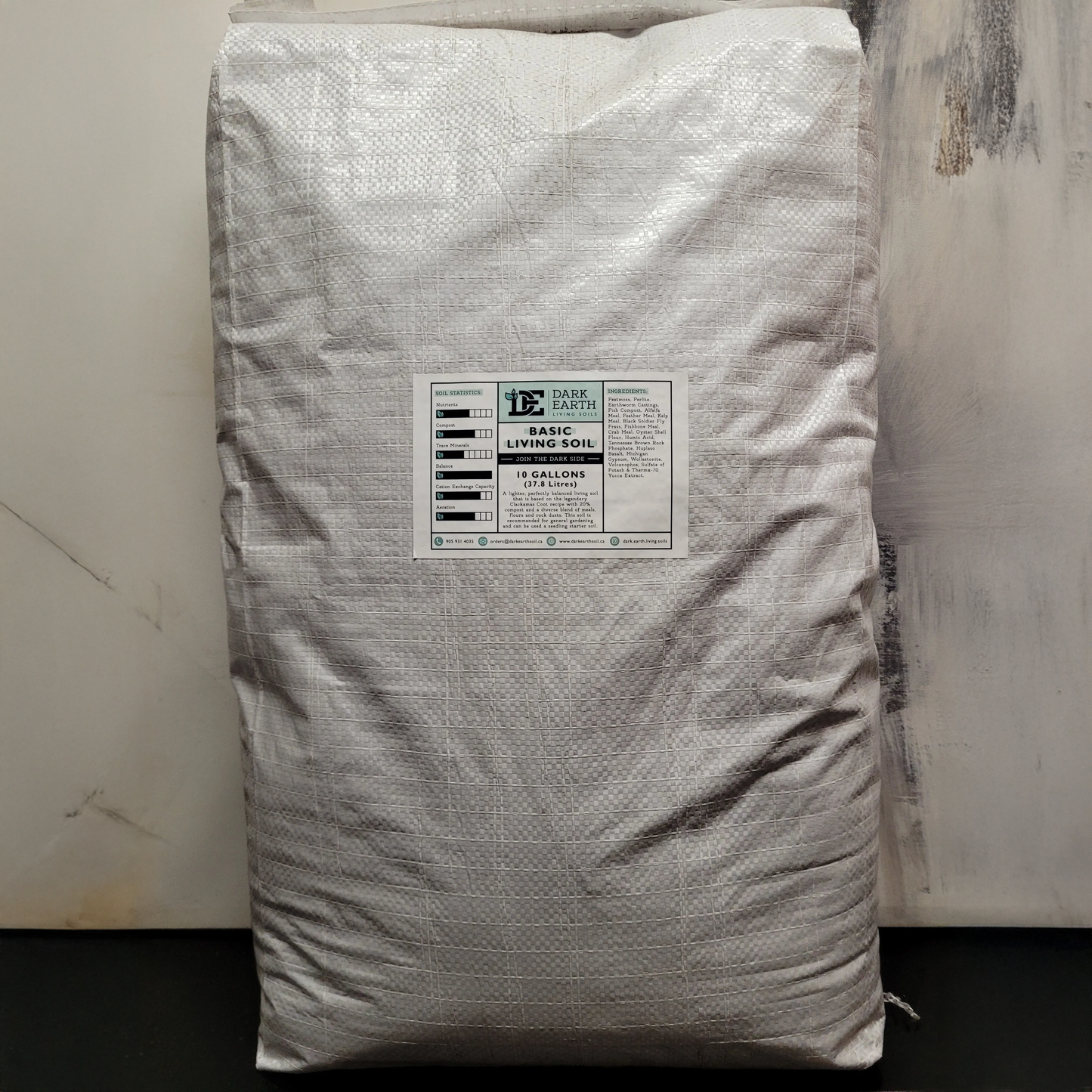
Dark Earth Living Soils Basic Living Soil is a living soil mix for organic gardening that delivers balanced nutrition through a biologically active living soil built to support an active root-zone ecosystem.
This nutrient dense living soil is made with 20% compost by weight and a diverse blend of meals, flours and rock dusts. The result is a soil-based growing medium designed to supply steady fertility while supporting a highly active soil food web that helps keep the root zone lively over time.
Basic Living Soil is made for organic growers who want a ready-to-go soil blend that fits common garden goals without extra complexity. It is described as ideal for growing vegetables, herbs and flowers, making it a practical option for indoor containers, patio planters, and outdoor garden spaces where you want a biologically active foundation.
The facts layer is straightforward and transparent. This living soil mix is built on a peatmoss and perlite base with earthworm castings and fish compost, then fortified with plant- and marine-based meals such as alfalfa meal, feather meal, and kelp meal, plus insect frass, fishbone meal, and crab meal. Mineral inputs and soil conditioners include soft rock phosphate, volcanic basalt rock dust, gypsum, wollastonite, volcanophos, sulfate of potash, humic acid, oyster shell flour, and yucca extract.
If reusing soil matters in your garden, Basic Living Soil is positioned as reusable for multiple cycles, with ongoing maintenance supported through top dressing and re-amending. That reuse-forward positioning, combined with 20% compost by weight and a highly active soil food web, makes it a strong fit for growers who want a nutrient dense living soil that stays focused on long-term soil performance.
Dark Earth Living Soils Basic Living Soil is a good fit for gardeners seeking a biologically active living soil with balanced nutrition, a diverse blend of meals, flours and rock dusts, and a living soil mix that’s ideal for growing vegetables, herbs and flowers.
This nutrient dense living soil is made with 20% compost by weight and a diverse blend of meals, flours and rock dusts. The result is a soil-based growing medium designed to supply steady fertility while supporting a highly active soil food web that helps keep the root zone lively over time.
Basic Living Soil is made for organic growers who want a ready-to-go soil blend that fits common garden goals without extra complexity. It is described as ideal for growing vegetables, herbs and flowers, making it a practical option for indoor containers, patio planters, and outdoor garden spaces where you want a biologically active foundation.
The facts layer is straightforward and transparent. This living soil mix is built on a peatmoss and perlite base with earthworm castings and fish compost, then fortified with plant- and marine-based meals such as alfalfa meal, feather meal, and kelp meal, plus insect frass, fishbone meal, and crab meal. Mineral inputs and soil conditioners include soft rock phosphate, volcanic basalt rock dust, gypsum, wollastonite, volcanophos, sulfate of potash, humic acid, oyster shell flour, and yucca extract.
If reusing soil matters in your garden, Basic Living Soil is positioned as reusable for multiple cycles, with ongoing maintenance supported through top dressing and re-amending. That reuse-forward positioning, combined with 20% compost by weight and a highly active soil food web, makes it a strong fit for growers who want a nutrient dense living soil that stays focused on long-term soil performance.
Dark Earth Living Soils Basic Living Soil is a good fit for gardeners seeking a biologically active living soil with balanced nutrition, a diverse blend of meals, flours and rock dusts, and a living soil mix that’s ideal for growing vegetables, herbs and flowers.
Product benefits
Complete Super Soil; Nutrient Retention; Soil Biology Support; Root Zone Biology; Consistent Performance; Indoor; Outdoor; Flowering Stage; Vegetative Stage; Soilless; Organic.
Derived from
Peat Moss; Perlite; Earthworm Castings; Fish Compost; Alfalfa Meal; Feather Meal; Kelp Meal; Insect Frass; Fishbone Meal; Crustacean Meal; Oyster Shell Flour; Humic Acid; Tennessee Brown Rock Phosphate; Huplosa Basalt; Gypsum; Wollastonite; Volcanophos; Bentonite Clay.
Frequently Asked Questions
Frequently Asked Questions
Why is perlite important for plant growth, and what makes it different from other mix ingredients?
Are earthworm castings a fertilizer or more of a soil conditioner?
What does fish compost do for plants?
What makes alfalfa meal important for plant growth compared to other natural amendments?
What does feather meal do for plants?
What does fishbone meal do for plant roots?
Why do growers use crustacean meal in soil mixes?
Why is humic acid important for plant growth?
Is bentonite clay good for plants in containers and garden beds?
Is peat moss good for all potting mixes?
What does kelp meal do for plants?
What makes insect frass different from other organic soil amendments?
What does oyster shell flour do for plants?
Is Tennessee brown rock phosphate a fast fix for phosphorus deficiency?
How long does huplosa basalt take to make a difference?
Does gypsum change soil pH?
What does wollastonite do for plants?
What does volcanophos do for plants?
Frequently purchased together
-
-
Dark Earth Black Magic Super Soil (Premium Living Soil) - 37.85 Litre
Regular price $39.99Regular price -
-
Dark Earth Soil Thrive Nutrient Blend - 5.18 Lb
Regular price $24.94Regular price
Reviews are submitted by verified customers after purchase. This section shows a summary of product feedback rather than the full individual review list.