

Frequently purchased together
-
-
Current Culture Bud Booster Early - 1 Quart
Regular price $28.88Regular price -
Current Culture Bud Booster Mid - 1 Quart
Regular price $28.88Regular price


Current Culture Bloom B - 1 Quart
Newmarket, Ontario (Head Office)
1175 Stellar Drive, Unit #5
Newmarket, ON L3Y 7B8
- Mon10:00am–6:00pm
- Tue10:00am–6:00pm
- Wed10:00am–6:00pm
- Thu10:00am–6:00pm
- Fri10:00am–6:00pm
- Sat10:00am–4:00pm
- SunClosed


Barrie, Ontario
106 Saunders Road, Unit #2A
Barrie, ON L4N 9A8
- Mon10:00am–5:00pm
- Tue10:00am–5:00pm
- Wed10:00am–5:00pm
- Thu10:00am–5:00pm
- Fri10:00am–5:00pm
- Sat10:00am–3:00pm
- SunClosed
Winnipeg, Manitoba
915 McLeod Avenue, Unit #4
Winnipeg, MB R2G 0Y4
- Mon10:00am–6:00pm
- Tue10:00am–6:00pm
- Wed10:00am–6:00pm
- Thu10:00am–6:00pm
- Fri10:00am–6:00pm
- Sat11:00am–3:00pm
- SunClosed
Sign in required
Back-in-stock notification
Select the store locations where you’d like to pick up this item, or choose Shipping to have it delivered.
Special order request
Select the store where you’d prefer to pick up your special order. To choose a different store, unselect your current choice first.
Manufacturer Recommended Products

Description
Description
Description
Cultured Solutions Bloom A and Bloom B are each a full spectrum, mineral based nutrient designed to supply the elements plants need as they push forward into the reproductive stage. The formula is built around a properly balanced dose of minerals in solution, supporting steady performance when flowering and fruiting demand increases. Instead of leaning on heavy extras, this approach keeps the focus on a clean, mineral-based foundation that helps plants thrive during bloom.
Because it’s an A/B bloom formula, you get the control of a two-part nutrient while keeping the overall role simple: deliver complete mineral nutrition for reproductive-stage growth. That makes it a practical fit for growers who value repeatability, want a straightforward bloom nutrient core, and prefer a mineral based nutrient profile with trace minerals rather than a complex additive stack.
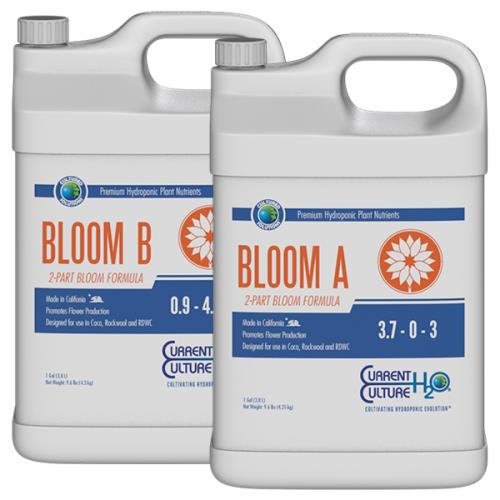
Here’s the compact facts layer. Bloom A is a liquid fertilizer with an NPK of 3.7–0–3, and Bloom B is a liquid fertilizer with an NPK of 0.9–4.8–6.2. The mineral inputs include ammonium calcium nitrate and potassium nitrate, plus EDTA-based micronutrient sources and trace borate and molybdate sources; Bloom B is built from potassium phosphate, potassium nitrate, and magnesium sulfate.
This 2-part premium hydroponics bloom nutrient is suitable for rockwool, coco, and soilless media, and it’s also suitable for common hydroponic system styles including deep water culture, recirculating deep water culture, nutrient film technique, and aeroponics. It’s a good fit for growers who want a clear, mineral-forward bloom base designed for reproductive-stage performance, without turning their nutrient plan into a complicated process.
How to use
- Week 1: do not use this product during this week of vegetative growth.
- Week 2: do not use this product during this week of vegetative growth.
- Week 3: do not use this product during this week of vegetative growth.
- Week 4: do not use this product during this week of vegetative growth.
Flowering stage - Bloom B:
- Week 1: mix 2.112 ml per litre of water or nutrient solution.
- Week 2: mix 2.112 ml per litre of water or nutrient solution.
- Week 3: mix 2.376 ml per litre of water or nutrient solution.
- Week 4: mix 2.376 ml per litre of water or nutrient solution.
- Week 5: mix 2.376 ml per litre of water or nutrient solution.
- Week 6: mix 2.112 ml per litre of water or nutrient solution.
- Week 7: mix 1.056 ml per litre of water or nutrient solution.
- Week 8: mix 0.792 ml per litre of water or nutrient solution.
- Week 9: do not use this product during this week of flowering.
Vegetative stage - Bloom B:
- Week 1: do not use this product during this week of vegetative growth.
- Week 2: do not use this product during this week of vegetative growth.
- Week 3: do not use this product during this week of vegetative growth.
- Week 4: do not use this product during this week of vegetative growth.
Flowering stage - Bloom B:
- Week 1: mix 0.924 ml per litre of water or nutrient solution.
- Week 2: mix 1.19 ml per litre of water or nutrient solution.
- Week 3: mix 1.584 ml per litre of water or nutrient solution.
- Week 4: mix 1.584 ml per litre of water or nutrient solution.
- Week 5: mix 1.848 ml per litre of water or nutrient solution.
- Week 6: mix 1.584 ml per litre of water or nutrient solution.
- Week 7: mix 1.056 ml per litre of water or nutrient solution.
- Week 8: mix 0.792 ml per litre of water or nutrient solution.
- Week 9: do not use this product during this week of flowering.
Product benefits
Guaranteed analysis
Derived from
How To Use
How To Use
How to Use Current Culture Bloom B - 1 Quart
Step-by-step mixing and feeding instructions for Current Culture Bloom B - 1 Quart.
Mixing & preparation
Fill your reservoir or watering container with clean, room-temperature water first. Shake the bottle of Current Culture Bloom B - 1 Quart well before every use. Using the feeding schedule below, measure the recommended dose and add it directly to the water while stirring. Allow the solution to mix fully before adding any other fertilizers, additives, or supplements.
Always add nutrients to water — not the other way around. Mix thoroughly between products to ensure an even, stable nutrient solution.
Week-by-week feeding schedule
Vegetative stage — Bloom B
- Week 1: do not use this product during this week of vegetative growth.
- Week 2: do not use this product during this week of vegetative growth.
- Week 3: do not use this product during this week of vegetative growth.
- Week 4: do not use this product during this week of vegetative growth.
Flowering stage — Bloom B
- Week 1: mix 2.112 ml per litre of water or nutrient solution.
- Week 2: mix 2.112 ml per litre of water or nutrient solution.
- Week 3: mix 2.376 ml per litre of water or nutrient solution.
- Week 4: mix 2.376 ml per litre of water or nutrient solution.
- Week 5: mix 2.376 ml per litre of water or nutrient solution.
- Week 6: mix 2.112 ml per litre of water or nutrient solution.
- Week 7: mix 1.056 ml per litre of water or nutrient solution.
- Week 8: mix 0.792 ml per litre of water or nutrient solution.
- Week 9: do not use this product during this week of flowering.
Vegetative stage — Bloom B
- Week 1: do not use this product during this week of vegetative growth.
- Week 2: do not use this product during this week of vegetative growth.
- Week 3: do not use this product during this week of vegetative growth.
- Week 4: do not use this product during this week of vegetative growth.
Flowering stage — Bloom B
- Week 1: mix 0.924 ml per litre of water or nutrient solution.
- Week 2: mix 1.19 ml per litre of water or nutrient solution.
- Week 3: mix 1.584 ml per litre of water or nutrient solution.
- Week 4: mix 1.584 ml per litre of water or nutrient solution.
- Week 5: mix 1.848 ml per litre of water or nutrient solution.
- Week 6: mix 1.584 ml per litre of water or nutrient solution.
- Week 7: mix 1.056 ml per litre of water or nutrient solution.
- Week 8: mix 0.792 ml per litre of water or nutrient solution.
- Week 9: do not use this product during this week of flowering.
Tips for best results
- Maintain pH and EC/ppm within the range recommended for your growing medium and crop.
- Use fresh nutrient solution whenever possible and avoid leaving mixed solution stagnant for long periods.
- Store nutrients in a cool, dark place away from direct sunlight and extreme temperatures.
- Keep bottles tightly sealed when not in use to reduce air exposure and preserve product quality.
- Use clean measuring tools and regularly rinse or clean your reservoir, lines, and irrigation equipment.
Common mistakes to avoid
- Do not mix different nutrients or additives together in concentrated form before adding them to water.
- Do not exceed the recommended dosage unless you are following a tested, crop-specific feeding plan.
- Do not skip pH or EC/ppm checks when growing in hydroponic or soilless systems.
- Do not allow the nutrient solution to freeze or overheat, as this can damage the formulation.
- Do not ignore the directions on the product label for your specific crop, growth stage, and system type.
Warnings & Safety
Warnings & Safety
Important – Safety Information
General Safety Precautions
First Aid – Skin Contact
First Aid – Eye Contact
First Aid – Ingestion
First aid – Inhalation
Storage And Handling
Important – Medical
Guaranteed Minimum Analysis
Guaranteed Minimum Analysis
| Nitrate Nitrogen (N) | 0.9% |
|---|---|
| Available Phosphate (P205) | 4.8% |
| Soluble Potash (K2O) | 6.2% |
| Water Soluble Magnesium (Mg) | 0.75% |
| Sulfur (S) | 1.0% |
Derived From
Derived From
Frequently Asked Questions
Frequently Asked Questions
What does nitrate nitrogen (N) do for plants?
Why is soluble potash (K2O) important for plants?
Why is water soluble magnesium important for plant growth?
Why is sulfur (S) important for plant growth?
Is potassium nitrate better for quick deficiency correction than other potassium sources?
What does magnesium sulfate do for plants?
Safety & Technical Documents
Safety & Technical Documents
Frequently purchased together
-
-
Current Culture Bud Booster Early - 1 Quart
Regular price $28.88Regular price -
Current Culture Bud Booster Mid - 1 Quart
Regular price $28.88Regular price

Vegetative — Week 1
-
Veg A—
-
Veg B—
-
Bloom A—
-
Bloom B—
-
Coco Cal—
-
Bud Booster—
-
UC Roots—
Flowering — Week 1
-
Veg A—
-
Veg B—
-
Bloom A—
-
Bloom B—
-
Coco Cal—
-
Bud Booster—
-
UC Roots—
Vegetative — Week 1
-
Veg A—
-
Veg B—
-
Bloom A—
-
Bloom B—
-
Coco Cal—
-
Bud Booster—
-
Clear Line—
Flowering — Week 1
-
Veg A—
-
Veg B—
-
Bloom A—
-
Bloom B—
-
Coco Cal—
-
Bud Booster—
-
Clear Line—
Vegetative — Week 1
-
Veg A—
-
Veg B—
-
Bloom A—
-
Bloom B—
-
UC Roots—
-
Coco Cal—
-
Bud Booster—
Flowering — Week 1
-
Veg A—
-
Veg B—
-
Bloom A—
-
Bloom B—
-
UC Roots—
-
Coco Cal—
-
Bud Booster—
Vegetative — Week 1
-
Veg A—
-
Veg B—
-
Bloom A—
-
Bloom B—
-
Coco Cal—
-
Bud Booster—
-
Clear Line—
Flowering — Week 1
-
Veg A—
-
Veg B—
-
Bloom A—
-
Bloom B—
-
Coco Cal—
-
Bud Booster—
-
Clear Line—