


Frequently purchased together
-
Advanced Nutrients Voodoo Juice - 1 Litre
Regular price $94.99Regular price -
Advanced Nutrients Tarantula - 500 ML
Regular price $48.46Regular price -
Advanced Nutrients Sensizym - 1 Litre
Regular price $41.99Regular price -
Advanced Nutrients Sensi Cal-Mag Xtra - 1 Litre
Regular price $24.05Regular price
Reviews are submitted by verified customers after purchase. This section shows a summary of product feedback rather than the full individual review list.
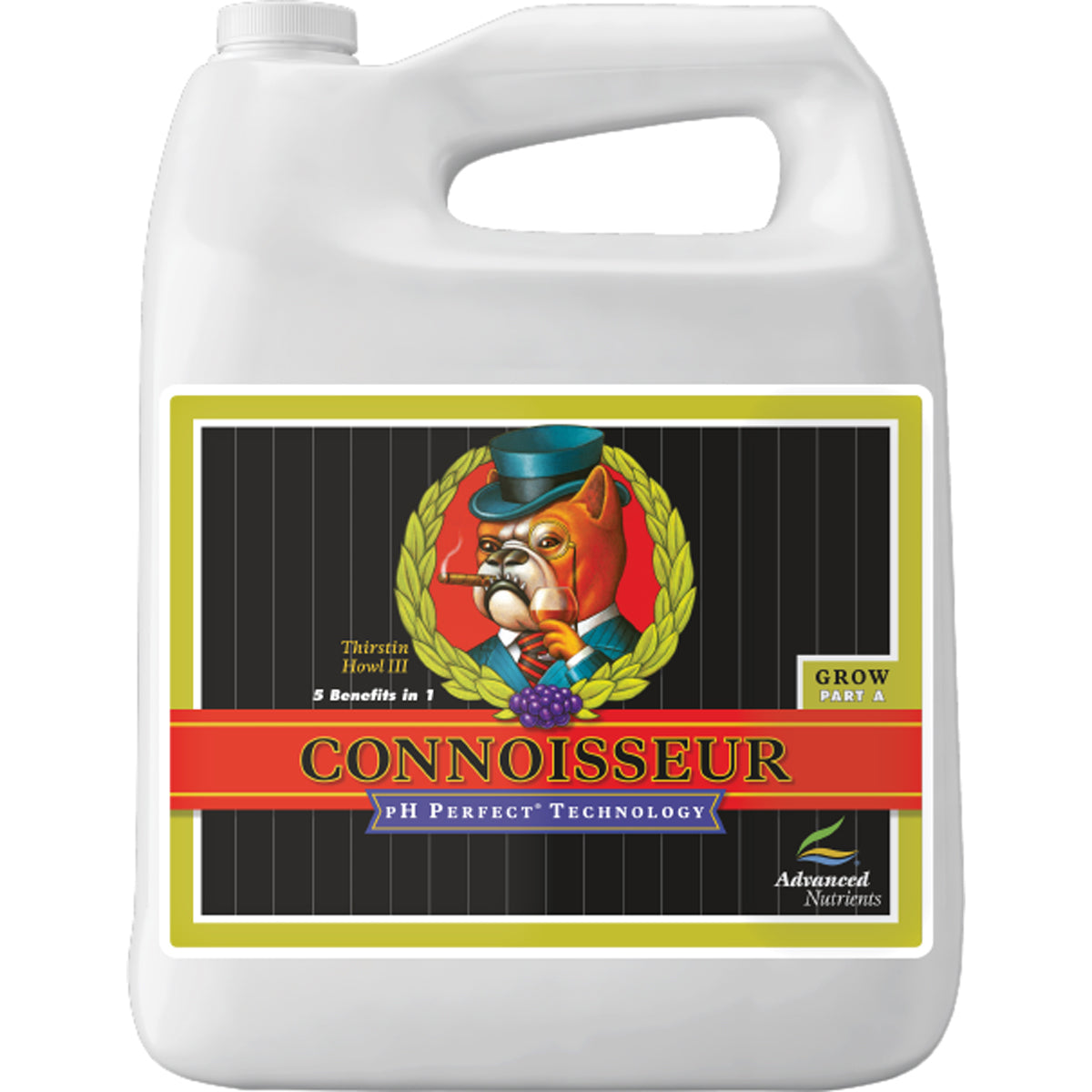
Advanced Nutrients pH Perfect Connoisseur Grow A - 4 Litre
Regular price
$82.99
Regular price
Sale price
$82.99
Shipping calculated at checkout.
Store Availability
Newmarket, Ontario (Head Office)
1175 Stellar Drive, Unit #5
Newmarket, ON L3Y 7B8
- Mon10:00am–6:00pm
- Tue10:00am–6:00pm
- Wed10:00am–6:00pm
- Thu10:00am–6:00pm
- Fri10:00am–6:00pm
- Sat10:00am–4:00pm
- SunClosed


Barrie, Ontario
106 Saunders Road, Unit #2A
Barrie, ON L4N 9A8
- Mon10:00am–5:00pm
- Tue10:00am–5:00pm
- Wed10:00am–5:00pm
- Thu10:00am–5:00pm
- Fri10:00am–5:00pm
- Sat10:00am–3:00pm
- SunClosed
Winnipeg, Manitoba
915 McLeod Avenue, Unit #4
Winnipeg, MB R2G 0Y4
- Mon10:00am–6:00pm
- Tue10:00am–6:00pm
- Wed10:00am–6:00pm
- Thu10:00am–6:00pm
- Fri10:00am–6:00pm
- Sat11:00am–3:00pm
- SunClosed
Quantity
Qualifies for Free Shipping Promotion
Sign in required
Back-in-stock notification
Select the store locations where you’d like to pick up this item, or choose Shipping to have it delivered.
Email notifications are turned off
Turn on email marketing to receive back-in-stock notifications.
Open account profile
Special order request
Select the store where you’d prefer to pick up your special order. To choose a different store, unselect your current choice first.
Manufacturer Recommended Products
Description
Description
Description
Advanced Nutrients pH Perfect® Connoisseur® Grow A+B is a two-part base nutrient system for the vegetative stage, built to support strong growth with less manual pH balancing. It’s an ultra-premium base fertilizer designed for sophisticated grows where consistency and nutrient availability matter.
This formula combines pH Perfect technology with super-absorptive chelation to help keep key elements available in demanding environments. A wide range of chelated micronutrients, along with macro and secondary nutrients, is positioned to support vigorous vegetative development and help plants build sturdier stalks for a stronger finish. By focusing on stable pH levels, it also helps reduce stress tied to pH swings, keeping growth moving forward instead of stalling.
For modern setups, pH Perfect® Connoisseur® Grow A+B is specially designed for use with diverse hydroponic growing media and is suited to watering systems, including aeroponics, drip irrigation and emitters, nft, flood and drain, and deep water culture. It’s also positioned for indoor / outdoor gardens, so it can stay in place as your environment and irrigation style evolve.
For a compact facts layer, the stated npk is 4-0-0 for Part A and 1-2-7 for Part B. The formula also highlights amino acid complexes and humic acid, plus Wet Betty, a non-ionic surfactant, as built-in inputs that support nutrient absorption through the root zone and help reinforce the product’s chelation-focused approach. As a formulation note, Advanced Nutrients states it does not use paclobutrazol, daminozide, or other banned plant growth regulators in its products.
This is a good fit for experienced growers who want an ultra-premium, two-part base nutrient system for the vegetative stage, with pH Perfect technology, chelated micronutrients, and broad coverage across hydroponics, coco coir, and automated watering systems.
This formula combines pH Perfect technology with super-absorptive chelation to help keep key elements available in demanding environments. A wide range of chelated micronutrients, along with macro and secondary nutrients, is positioned to support vigorous vegetative development and help plants build sturdier stalks for a stronger finish. By focusing on stable pH levels, it also helps reduce stress tied to pH swings, keeping growth moving forward instead of stalling.
For modern setups, pH Perfect® Connoisseur® Grow A+B is specially designed for use with diverse hydroponic growing media and is suited to watering systems, including aeroponics, drip irrigation and emitters, nft, flood and drain, and deep water culture. It’s also positioned for indoor / outdoor gardens, so it can stay in place as your environment and irrigation style evolve.
For a compact facts layer, the stated npk is 4-0-0 for Part A and 1-2-7 for Part B. The formula also highlights amino acid complexes and humic acid, plus Wet Betty, a non-ionic surfactant, as built-in inputs that support nutrient absorption through the root zone and help reinforce the product’s chelation-focused approach. As a formulation note, Advanced Nutrients states it does not use paclobutrazol, daminozide, or other banned plant growth regulators in its products.
This is a good fit for experienced growers who want an ultra-premium, two-part base nutrient system for the vegetative stage, with pH Perfect technology, chelated micronutrients, and broad coverage across hydroponics, coco coir, and automated watering systems.
How to use
Vegetative stage - Grow A:
- Week 1: mix 1.0 ml per litre of water or nutrient solution.
- Week 2: mix 2.0 ml per litre of water or nutrient solution.
- Week 3: mix 3.0 ml per litre of water or nutrient solution.
- Week 4: mix 4.0 ml per litre of water or nutrient solution.
Flowering stage - Grow A:
- Week 1: do not use this product during this week of flowering.
- Week 2: do not use this product during this week of flowering.
- Week 3: do not use this product during this week of flowering.
- Week 4: do not use this product during this week of flowering.
- Week 5: do not use this product during this week of flowering.
- Week 6: do not use this product during this week of flowering.
- Week 7: do not use this product during this week of flowering.
- Week 8: do not use this product during this week of flowering.
- Week 1: mix 1.0 ml per litre of water or nutrient solution.
- Week 2: mix 2.0 ml per litre of water or nutrient solution.
- Week 3: mix 3.0 ml per litre of water or nutrient solution.
- Week 4: mix 4.0 ml per litre of water or nutrient solution.
Flowering stage - Grow A:
- Week 1: do not use this product during this week of flowering.
- Week 2: do not use this product during this week of flowering.
- Week 3: do not use this product during this week of flowering.
- Week 4: do not use this product during this week of flowering.
- Week 5: do not use this product during this week of flowering.
- Week 6: do not use this product during this week of flowering.
- Week 7: do not use this product during this week of flowering.
- Week 8: do not use this product during this week of flowering.
Product benefits
Vegetative Stage; Indoor; Outdoor; Regular Watering; Watering Systems; Coco Coir Safe; Hydroponics; Soil; Soilless; Premium Base; Vegetative Support; No pH Adjusting; pH Stability; Full Spectrum Nutrients; Better Nutrient Uptake; Stronger Stems; Multi-System Use.
Guaranteed analysis
Nitrate Nitrogen (N): 4.0%; Calcium (Ca): 3.5%; Water Soluble Magnesium (Mg): 0.9%; Total Iron (Fe): 0.05%; Chelated Iron (Fe): 0.04%; Water Soluble Iron (Fe): 0.01%; Total Manganese (Mn): 0.05%; Chelated Manganese (Mn): 0.04%; Water Soluble Manganese (Mn): 0.01%.
Derived from
Boron Amino Chelate; Humic Acid; Calcium Nitrate; Magnesium Nitrate; Magnesium Amino Acid Chelate; Iron EDTA; Iron Amino Acid Chelate; Iron DTPA; Iron EDDHA; Manganese EDTA; Manganese Amino Chelate; Zinc EDTA; Zinc Amino Chelate; Copper EDTA; Copper Amino Acid Chelate; Molybdenum Amino Chelate; Cobalt Amino Acid Chelate; Free-Form EDTA; L-Alanine; L-Arginine; L-Aspartic Acid; L-Cystine/Cysteine; L-Glutamine; L-Glutamic Acid; L-Glycine; L-Histidine; L-Hydroxyproline; L-Isoleucine; L-Leucine; L-Lysine; L-Methionine; L-Phenylalanine; L-Proline; L-Serine; L-Threonine; L-Tryptophan; L-Tyrosine; L-Valine.
How To Use
How To Use
How to Use Advanced Nutrients pH Perfect Connoisseur Grow A - 4 Litre
Step-by-step mixing and feeding instructions for Advanced Nutrients pH Perfect Connoisseur Grow A - 4 Litre.
Mixing & preparation
Fill your reservoir or watering container with clean, room-temperature water first. Shake the bottle of Advanced Nutrients pH Perfect Connoisseur Grow A - 4 Litre well before every use. Using the feeding schedule below, measure the recommended dose and add it directly to the water while stirring. Allow the solution to mix fully before adding any other fertilizers, additives, or supplements.
Always add nutrients to water — not the other way around. Mix thoroughly between products to ensure an even, stable nutrient solution.
Week-by-week feeding schedule
Vegetative stage — Grow A
- Week 1: mix 1.0 ml per litre of water or nutrient solution.
- Week 2: mix 2.0 ml per litre of water or nutrient solution.
- Week 3: mix 3.0 ml per litre of water or nutrient solution.
- Week 4: mix 4.0 ml per litre of water or nutrient solution.
Flowering stage — Grow A
- Week 1: do not use this product during this week of flowering.
- Week 2: do not use this product during this week of flowering.
- Week 3: do not use this product during this week of flowering.
- Week 4: do not use this product during this week of flowering.
- Week 5: do not use this product during this week of flowering.
- Week 6: do not use this product during this week of flowering.
- Week 7: do not use this product during this week of flowering.
- Week 8: do not use this product during this week of flowering.
Tips for best results
- Maintain pH and EC/ppm within the range recommended for your growing medium and crop.
- Use fresh nutrient solution whenever possible and avoid leaving mixed solution stagnant for long periods.
- Store nutrients in a cool, dark place away from direct sunlight and extreme temperatures.
- Keep bottles tightly sealed when not in use to reduce air exposure and preserve product quality.
- Use clean measuring tools and regularly rinse or clean your reservoir, lines, and irrigation equipment.
Common mistakes to avoid
- Do not mix different nutrients or additives together in concentrated form before adding them to water.
- Do not exceed the recommended dosage unless you are following a tested, crop-specific feeding plan.
- Do not skip pH or EC/ppm checks when growing in hydroponic or soilless systems.
- Do not allow the nutrient solution to freeze or overheat, as this can damage the formulation.
- Do not ignore the directions on the product label for your specific crop, growth stage, and system type.
Warnings & Safety
Warnings & Safety
Important – Safety Information
General Safety Precautions
First Aid – Skin Contact
First Aid – Eye Contact
First Aid – Ingestion
First aid – Inhalation
Storage And Handling
Important – Medical
Guaranteed Minimum Analysis
Guaranteed Minimum Analysis
| Nitrate Nitrogen (N) | 4.0% |
|---|---|
| Calcium (Ca) | 3.5% |
| Water Soluble Magnesium (Mg) | 0.9% |
| Total Iron (Fe) | 0.05% |
| Chelated Iron (Fe) | 0.04% |
| Water Soluble Iron (Fe) | 0.01% |
| Total Manganese (Mn) | 0.05% |
| Chelated Manganese (Mn) | 0.04% |
| Water Soluble Manganese (Mn) | 0.01% |
Derived From
Derived From
Frequently Asked Questions
Frequently Asked Questions
What does nitrate nitrogen (N) do for plants?
Why is calcium important for plant growth?
Why is water soluble magnesium important for plant growth?
Why is total iron (Fe) important for plant growth?
Why is chelated iron important for plants, and what makes it different from other iron sources?
Why is water soluble iron (Fe) important for plants, and what makes it different from other iron forms?
Why is total manganese (Mn) important for plant growth?
Why is chelated manganese (Mn) important for plant growth?
Why is water-soluble manganese important for plant growth?
What is boron amino chelate used for in plants?
Why is humic acid important for plant growth?
Why do growers use calcium nitrate instead of other calcium sources?
Why is copper EDTA used in plant nutrition instead of plain copper?
Why is copper amino acid chelate important for healthy plant growth?
What is cobalt amino acid chelate used for in plant growth?
What does magnesium nitrate do for plants?
What makes magnesium amino acid chelate different from other magnesium sources for plants?
What makes iron EDTA effective for fixing pale new leaves?
Why does iron amino acid chelate green up new leaves faster than many other iron sources?
What does Iron DTPA do for pale new growth?
Why is Iron EDDHA better for plants growing in high-pH soil?
What makes manganese EDTA different from other manganese sources?
What does manganese amino chelate do for plant leaves?
What makes zinc EDTA better for preventing zinc lockout?
What are the early signs a plant needs zinc amino chelate?
What does molybdenum amino chelate do for plant nitrogen use?
What does free-form EDTA actually do for plants?
What does L-alanine do for plants?
What does L-arginine do for plants?
What does L-aspartic acid do for plants?
Is L-cysteine mainly a growth booster or a stress protector in plants?
What does L-glutamine do for plants?
What does L-glutamic acid do for plants?
What does L-glycine do for plants?
How does L-histidine help plants handle micronutrients?
What does L-hydroxyproline do for plants?
What does L-isoleucine do for plant growth?
What does L-leucine do for plants?
What does L-lysine do for plants?
What does L-methionine do for plants?
What does L-phenylalanine do for plants?
What does L-proline do for plants under stress?
What does L-serine do for plants?
What does L-threonine do for plant growth?
Why does L-tryptophan matter so much for root development?
Is L-tyrosine mainly for growth or stress resistance?
What does L-Valine do for plants?
Safety & Technical Documents
Safety & Technical Documents
Frequently purchased together
-
Advanced Nutrients Voodoo Juice - 1 Litre
Regular price $94.99Regular price -
Advanced Nutrients Tarantula - 500 ML
Regular price $48.46Regular price -
Advanced Nutrients Sensizym - 1 Litre
Regular price $41.99Regular price -
Advanced Nutrients Sensi Cal-Mag Xtra - 1 Litre
Regular price $24.05Regular price
Reviews are submitted by verified customers after purchase. This section shows a summary of product feedback rather than the full individual review list.

Nutrient Feed Chart
Vegetative — Week 1
-
Grow A—
-
Grow B—
-
Bloom A—
-
Bloom B—
-
B-52—
-
Voodoo Juice—
-
Big Bud—
-
Overdrive—
Flowering — Week 1
-
Grow A—
-
Grow B—
-
Bloom A—
-
Bloom B—
-
B-52—
-
Voodoo Juice—
-
Big Bud—
-
Overdrive—
Vegetative — Week 1
-
Grow A—
-
Grow B—
-
Bloom A—
-
Bloom B—
-
B-52—
-
Voodoo Juice—
-
Big Bud—
-
Overdrive—
-
Piranha—
-
Bud Candy—
-
Flawless Finish—
Flowering — Week 1
-
Grow A—
-
Grow B—
-
Bloom A—
-
Bloom B—
-
B-52—
-
Voodoo Juice—
-
Big Bud—
-
Overdrive—
-
Piranha—
-
Bud Candy—
-
Flawless Finish—
Vegetative — Week 1
-
Grow A—
-
Grow B—
-
Bloom A—
-
Bloom B—
-
B-52—
-
Voodoo Juice—
-
Big Bud—
-
Overdrive—
-
Piranha—
-
Bud Candy—
-
Flawless Finish—
-
Tarantula—
-
Rhino Skin—
-
Sensizym—
-
Tasty Terpenes (Formerly Nirvana)—
Flowering — Week 1
-
Grow A—
-
Grow B—
-
Bloom A—
-
Bloom B—
-
B-52—
-
Voodoo Juice—
-
Big Bud—
-
Overdrive—
-
Piranha—
-
Bud Candy—
-
Flawless Finish—
-
Tarantula—
-
Rhino Skin—
-
Sensizym—
-
Tasty Terpenes (Formerly Nirvana)—
Vegetative — Week 1
-
Grow A—
-
Grow B—
-
Bloom A—
-
Bloom B—
-
B-52—
-
Voodoo Juice—
-
Big Bud—
-
Overdrive—
-
Piranha—
-
Bud Candy—
-
Flawless Finish—
-
Tarantula—
-
Rhino Skin—
-
Sensizym—
-
Tasty Terpenes (Formerly Nirvana)—
-
Bud Ignitor—
-
Bud Factor X—
Flowering — Week 1
-
Grow A—
-
Grow B—
-
Bloom A—
-
Bloom B—
-
B-52—
-
Voodoo Juice—
-
Big Bud—
-
Overdrive—
-
Piranha—
-
Bud Candy—
-
Flawless Finish—
-
Tarantula—
-
Rhino Skin—
-
Sensizym—
-
Tasty Terpenes (Formerly Nirvana)—
-
Bud Ignitor—
-
Bud Factor X—