

Frequently purchased together
-
 HOT ITEM
Botanicare Cal-Mag Plus - 1 Quart
Regular price $36.99Regular price -
 HOT ITEM
Botanicare Pure Blend Grow - 1 Quart
Regular price $39.99Regular price -
Botanicare Pure Blend Pro Bloom - 1 Quart
Regular price $38.99Regular price -
Botanicare Pure Blend Pro Bloom Soil - 1 Quart
Regular price $36.51Regular price


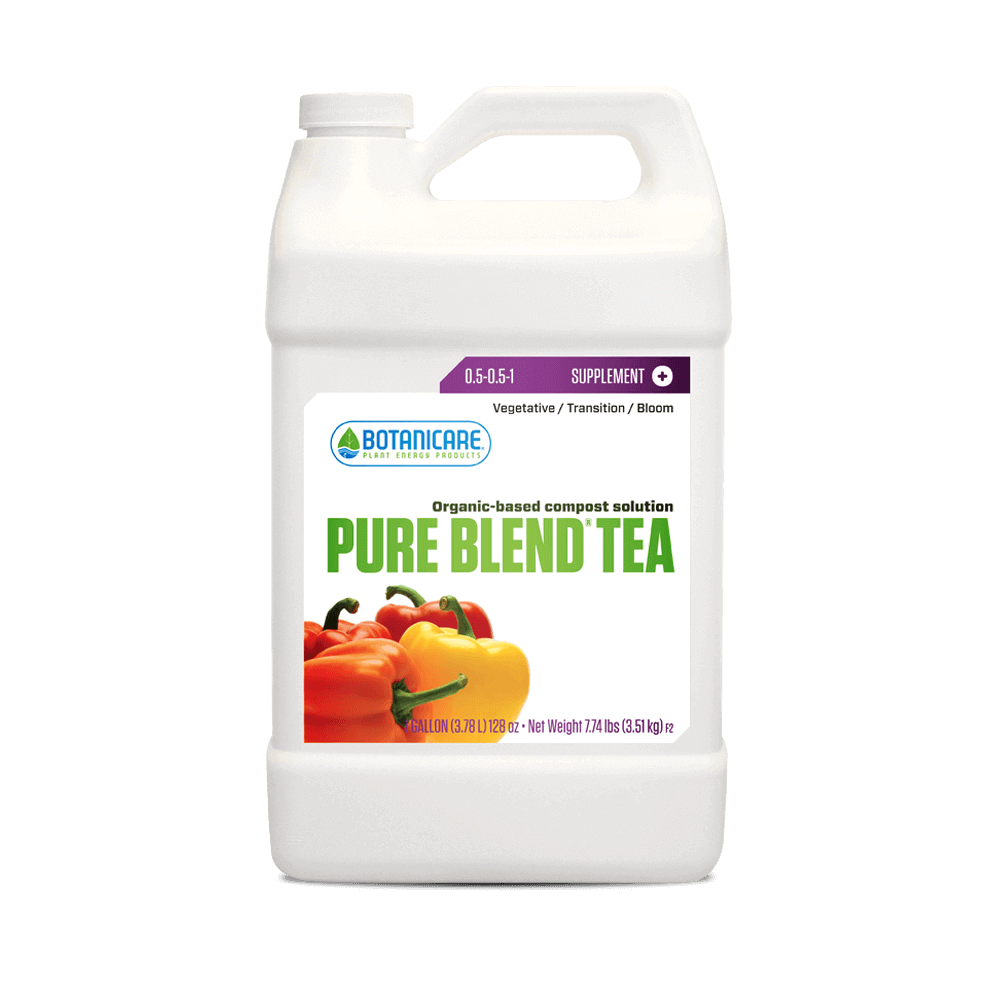
Botanicare Pure Blend Tea - 1 Gallon
Newmarket, Ontario (Head Office)
1175 Stellar Drive, Unit #5
Newmarket, ON L3Y 7B8
- Mon10:00am–6:00pm
- Tue10:00am–6:00pm
- Wed10:00am–6:00pm
- Thu10:00am–6:00pm
- Fri10:00am–6:00pm
- Sat10:00am–4:00pm
- SunClosed


Barrie, Ontario
106 Saunders Road, Unit #2A
Barrie, ON L4N 9A8
- Mon10:00am–6:00pm
- Tue10:00am–6:00pm
- Wed10:00am–6:00pm
- Thu10:00am–6:00pm
- Fri10:00am–6:00pm
- Sat10:00am–4:00pm
- SunClosed
Winnipeg, Manitoba
915 McLeod Avenue, Unit #4
Winnipeg, MB R2G 0Y4
- Mon10:00am–6:00pm
- Tue10:00am–6:00pm
- Wed10:00am–6:00pm
- Thu10:00am–6:00pm
- Fri10:00am–6:00pm
- Sat11:00am–3:00pm
- SunClosed
Description
Description
Pure Blend Tea is described as a highly available supplemental nutrient, which matters most when you’re aiming for consistent availability rather than heavy, base-fertilizer intensity. It’s positioned as a versatile plant food that stays relevant across both the vegetative and bloom phases, helping keep nutrition support consistent as plants move from early growth into flowering and fruiting.
In practical terms, this product is suited to hydroponic, soil, and soilless mediums, making it a straightforward option for mixed gardens and multi-media growers. Instead of narrowing the purpose to a single moment in the cycle, Pure Blend Tea is meant to remain useful across the growth cycle, including the vegetative and bloom phases, so your supplement choice can stay consistent while your plants change pace.
As a compact facts layer, Pure Blend Tea is 0.5-0.5-1.0. The formula is identified with inputs that include seaweed, blood meal, seabird guano, earthworm castings, fishmeal, citric acid, and leonardite ore. Those inputs align with the product’s role as a premium-grade supplement that emphasizes a broad, plant-focused nutrient support profile rather than a single-ingredient approach.
Pure Blend Tea is positioned for a wide plant scope, including fruits and flowers as well as aromatic herbs. If you’re looking for a highly available supplemental nutrient that works as a liquid plant supplement across hydroponic, soil, and soilless mediums, this is a good fit for growers who want a premium-grade versatile plant food that supports the vegetative and bloom phases without adding complexity to the overall garden plan.
Product benefits: Vegetative Stage; Flowering Stage; Indoor; Outdoor; Regular Watering; Watering Systems; Hydroponics; Coco Coir Safe; Soil; Soilless; Organic; Essential Nutrient Support; All-Stage Support; Steady Feeding; Plant-Available Nutrition; Wide Plant Use; Better Flavor; Aroma Boost; Multi-System Use.
Guaranteed analysis: Total Nitrogen (N): 0.5%; Available Phosphate (P2O5): 0.5%; Soluble Potash (K2O): 1.0%.
Derived from: Calcium Nitrate; Ammonium Phosphate; Potassium Nitrate; Kelp (Ascophyllum Nodosum).
How To Use
How To Use
How to Use Botanicare Pure Blend Tea - 1 Gallon
Step-by-step mixing and feeding instructions for Botanicare Pure Blend Tea - 1 Gallon.
Mixing & preparation
Fill your reservoir or watering container with clean, room-temperature water first. Shake the bottle of Botanicare Pure Blend Tea - 1 Gallon well before every use. Using the feeding schedule below, measure the recommended dose and add it directly to the water while stirring. Allow the solution to mix fully before adding any other fertilizers, additives, or supplements.
Always add nutrients to water — not the other way around. Mix thoroughly between products to ensure an even, stable nutrient solution.
Week-by-week feeding schedule
Vegetative stage — Pure Blend Tea
- Week 1: mix 1.32 ml per litre of water or nutrient solution.
- Week 2: mix 1.32 ml per litre of water or nutrient solution.
- Week 3: mix 1.32 ml per litre of water or nutrient solution.
- Week 4: mix 1.32 ml per litre of water or nutrient solution.
Flowering stage — Pure Blend Tea
- Week 1: mix 1.32 ml per litre of water or nutrient solution.
- Week 2: mix 1.32 ml per litre of water or nutrient solution.
- Week 3: mix 1.32 ml per litre of water or nutrient solution.
- Week 4: mix 1.32 ml per litre of water or nutrient solution.
- Week 5: mix 1.32 ml per litre of water or nutrient solution.
- Week 6: mix 1.32 ml per litre of water or nutrient solution.
- Week 7: mix 1.32 ml per litre of water or nutrient solution.
- Week 8: mix 1.32 ml per litre of water or nutrient solution.
- Week 9: do not use this product during this week of flowering.
Tips for best results
- Maintain pH and EC/ppm within the range recommended for your growing medium and crop.
- Use fresh nutrient solution whenever possible and avoid leaving mixed solution stagnant for long periods.
- Store nutrients in a cool, dark place away from direct sunlight and extreme temperatures.
- Keep bottles tightly sealed when not in use to reduce air exposure and preserve product quality.
- Use clean measuring tools and regularly rinse or clean your reservoir, lines, and irrigation equipment.
Common mistakes to avoid
- Do not mix different nutrients or additives together in concentrated form before adding them to water.
- Do not exceed the recommended dosage unless you are following a tested, crop-specific feeding plan.
- Do not skip pH or EC/ppm checks when growing in hydroponic or soilless systems.
- Do not allow the nutrient solution to freeze or overheat, as this can damage the formulation.
- Do not ignore the directions on the product label for your specific crop, growth stage, and system type.
Warnings & Safety
Warnings & Safety
Warning – Important Safety Information
This product may cause mild skin irritation and eye irritation. Avoid unnecessary contact with skin, eyes, and clothing. Use only as directed.
General safety precautions
Read and follow all instructions on the product label and any accompanying documentation before use. Keep out of reach of children and pets. Do not ingest. Avoid breathing vapours, mist, or dust that may be generated during handling or use.
Wear appropriate personal protective equipment (PPE), such as protective gloves, long sleeves, long pants and closed-toe footwear. When there is a risk of splashing or airborne particles, use safety glasses or other suitable eye and face protection.
First aid – skin contact
IF ON SKIN OR HAIR: Remove contaminated clothing immediately. Rinse skin with clean water for several minutes, then wash with mild soap and water. If irritation or redness develops and persists, seek medical attention. Wash contaminated clothing before reuse.
First aid – eye contact
IF IN EYES: Rinse cautiously with clean water for several minutes, keeping eyelids open. Remove contact lenses if present and easy to do. Continue rinsing. If irritation persists, obtain medical advice.
First aid – ingestion and inhalation
IF SWALLOWED: Rinse mouth thoroughly with water. Do not induce vomiting unless instructed by a medical professional. Seek medical attention if you feel unwell.
IF INHALED: Move the person to fresh air and keep them comfortable for breathing. If coughing, breathing difficulty, dizziness or other symptoms occur, seek medical assistance.
Storage and handling
Store this product in its original closed container, in a cool, dry and well-ventilated area. Protect from extreme temperatures and direct sunlight. Keep container tightly sealed when not in use.
Avoid release to drains, natural waterways or outdoor soil. Dispose of unused product and empty containers in accordance with local regulations and the directions on the label.
Important: If medical advice is needed, keep the product label or container available. Always follow the specific instructions and safety recommendations provided by the manufacturer. This safety notice is intended as general guidance and does not replace official label directions or documentation.
Guaranteed Minimum Analysis
Guaranteed Minimum Analysis
| Total Nitrogen (N) | 0.5% |
|---|---|
| Available Phosphate (P2O5) | 0.5% |
| Soluble Potash (K2O) | 1.0% |
Frequently Asked Questions
Frequently Asked Questions
Why is total nitrogen (N) important for plant growth, and what makes it different from other nutrients?
What does available phosphate (P₂O₅) do for plant growth?
Why is soluble potash (K2O) important for plants?
Why do growers use calcium nitrate instead of other calcium sources?
What makes ammonium phosphate different from other phosphorus sources for plant growth?
Is potassium nitrate better for quick deficiency correction than other potassium sources?
What are the signs a plant could benefit from ascophyllum nodosum?
Safety & Technical Documents
Safety & Technical Documents
Frequently purchased together
-
HOT ITEM
Botanicare Cal-Mag Plus - 1 Quart
Regular price $36.99Regular price -
HOT ITEM
Botanicare Pure Blend Grow - 1 Quart
Regular price $39.99Regular price -
Botanicare Pure Blend Pro Bloom - 1 Quart
Regular price $38.99Regular price -
Botanicare Pure Blend Pro Bloom Soil - 1 Quart
Regular price $36.51Regular price

Vegetative — Pure Blend Tea
-
—
Flowering — Pure Blend Tea
-
—